Physiotherapy and Taping

Physiotherapy and Taping

You’ve likely seen athletes wearing brightly coloured tape, but therapeutic taping is a powerful tool for everyone—not only for sports. At Providence Physio, our expert therapists use specific taping techniques as an integral part of your treatment plan to reduce pain, support injured tissues, and help you move with greater comfort. This approach forms an important part of our taping physiotherapy treatments available here in the UK.

What is Physiotherapy and Taping?

“Taping” in physiotherapy refers to the precise application of specialised tape to your body to achieve a specific therapeutic goal. It’s not a standalone treatment but a tool our physiotherapists use as part of your wider rehabilitation. Many patients searching for taping physiotherapy near me visit us for expert support and clear guidance.

We commonly use two main forms of taping:

  • Rigid Strapping Tape: This strong, non-elastic tape provides firm support and restricts unwanted movement. It is ideal for protecting an injured joint (such as a newly sprained ankle) or correcting joint alignment to allow tissues to heal.
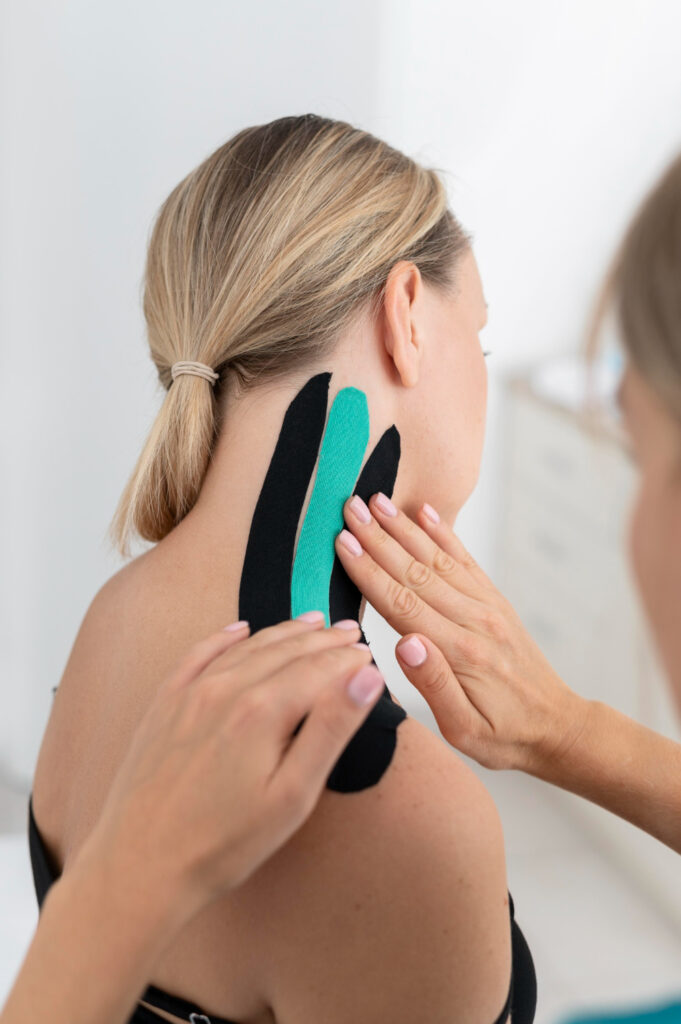
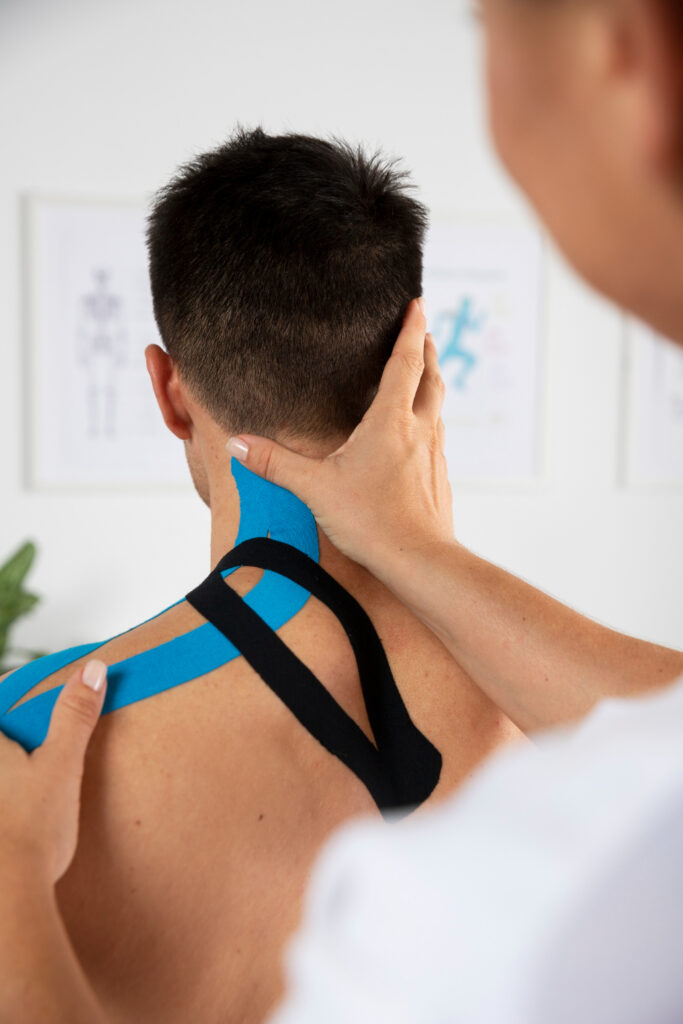
  • Elastic Kinesiology Tape (K-Tape): This flexible, stretchy tape (often brightly coloured) moves naturally with your body. Rather than locking a joint in place, K-Tape provides sensory feedback to your nervous system. This can help reduce pain, improve muscle activation, and support fluid drainage without limiting your motion. These are well-known physiotherapy taping techniques used as part of your recovery journey.
Professional physiotherapy session supporting recovery through guided exercises, functional movement training and personalised care.

How long does the treatment last?

Physiotherapy tape gently lifts the skin, which can improve circulation, reduce pressure on sensitive tissues, and provide sensory feedback to enhance muscle function. It supports movement rather than restricting it.

How many sessions will I need?

While some patients feel relief after just one session, a full course is needed for lasting tissue repair. The evidence-based protocol is typically 3 to 5 treatment sessions, spaced approximately one week apart. Your physiotherapist will determine the exact plan based on your specific condition.

What is taping in physiotherapy?

Taping in physiotherapy involves applying specialised tape to support joints, reduce pain, improve posture, and encourage healthy movement patterns.

What is physiotherapy taping?

Physiotherapy taping is the clinical use of rigid or elastic tape as part of a treatment programmer to support healing, improve stability, and enhance muscle activation.

Will taping limit my movement?

Elastic taping (K-Tape) is designed to move with your body and will not restrict natural movement. Rigid taping is used only when temporary movement restriction is needed for protection.

Find Out if Taping Can Help Your Recovery

Let us show you how this effective tool can support your journey back to pain-free movement.